
Our purpose is no longer simply to sell a product: we sell vision, inspiration, knowledge, and the ability to interpret the market so that people can feel better in such a complex and fast-paced world. Within our world, we wanted to interview someone who straddles two worlds: design and business. Creativity and the market. Inspiration and commercial reality.
This concept is framed by and inspired by the theme of our OUTLIER approach, because the best products are born precisely at that intersection.
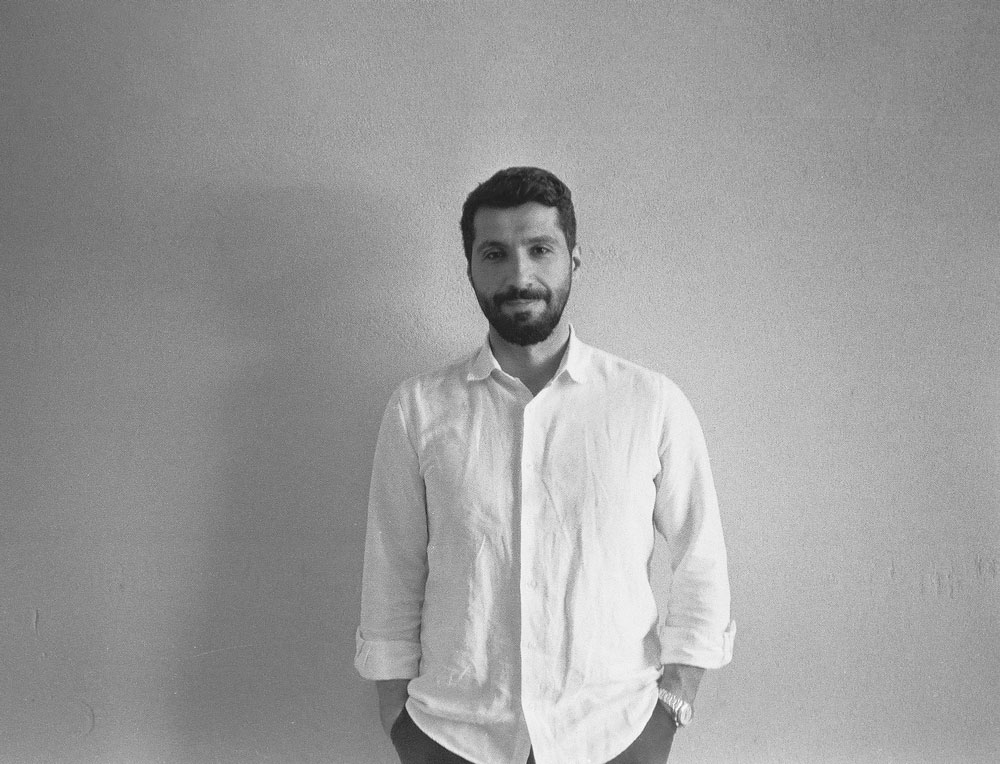
With a background that began in Graphic Design, moved through Industrial and Product Design, and was later complemented by a postgraduate degree in International Business, Jorge brings a transversal and uncommon perspective to the textile industry. His career path allows him to understand, simultaneously, the language of creation, product, and business. In this conversation, we reflect on the role of design in value creation, the evolution of international markets, and how knits continue to shape the future of brands.
THE INTERVIEW
YOUR TRAINING BEGAN IN DESIGN. HOW DOES THAT CREATIVE PERSPECTIVE INFLUENCE YOUR BUSINESS APPROACH TODAY?
My education began in graphic design, moved on to industrial and product design, and was later complemented by a graduate degree in international business. However, I never viewed these areas as separate disciplines. I always saw them as parts of the same journey. Design taught me a different way of looking at the world. It taught me to question what seems obvious, to seek to understand people’s needs, and to transform problems into solutions through products or services. Just as an artist seeks inspiration to create, a designer seeks to understand a need in order to find a solution. For me, that remains the true essence of design. Whenever there is a problem, there is an opportunity to create something that solves it.
This requires us to develop a very broad perspective. A designer doesn’t just design products; they seek to understand people, behaviors, cultures, and contexts. Only in this way can they create solutions that make sense and add value. Aesthetics are naturally part of this process, but I believe they should be a consequence, not the starting point. When a product truly meets a need, functions well, and enhances the user’s experience, a connection is formed between the consumer and the brand. It is this connection that transforms a product into an experience and an experience into a lasting relationship. From my perspective, the principle is exactly the same in business. A business exists to solve problems, meet needs, and create value for its customers. When it stops doing that, it loses its reason for being. That’s why I’ve never been able to separate design from business, especially in our industry. Product development, brand strategy, and business development must go hand in hand. The product is not merely the result of strategy; it is strategy brought to life. It is through the product that a brand communicates its identity, its values, and how it wants to be perceived by the market.
My professional journey has been precisely the natural evolution of this way of thinking. It began in design and gradually incorporated knowledge of product development, markets, cultures, and international business. Today, at Trimalhas, I apply all these skills in an integrated way. More than just developing business, I seek to deeply understand each client, each market, and each context. Because I believe there are no one-size-fits-all solutions. There are solutions that make sense for a specific client, in a specific market, and at a specific moment. It is this ability to adapt that transforms products and services into value and allows us to build trusting relationships and lasting partnerships.
WE OFTEN VIEW DESIGN AND SALES AS SEPARATE FIELDS. IN YOUR EXPERIENCE, WHERE DO THESE TWO WORLDS INTERSECT?
In fact, I believe this separation stems from a traditional – and, in a way, reductive – view of how companies are organized, but not of how strategy and the dynamics of our industry actually work. From my perspective, design, product development, service, and business are all part of the same process. The product and the way the service is designed represent the intersection between the company’s strategy and market needs. It is through them that a company communicates its identity, brings its positioning to life, creates differentiation, and generates value for its customers. Therefore, rather than asking where design and business intersect, perhaps we should ask why they were ever viewed as separate fields.
WHAT DOES A SALESPERSON WITH A BACKGROUND IN DESIGN SEE DIFFERENTLY WHEN DEALING WITH A BRAND OR A DESIGNER?
I think the first thing that comes to mind is that I never view a brand through the lens of a “marketer with a background in design.” That has never been my approach. My first instinct is to figure out how Trimalhas can fit into that brand’s value chain and contribute to its success. That involves understanding much more than just a briefing or a technical spec sheet. I try to understand the client’s vision, who their consumer is, the context in which that product will exist, the challenges they aim to solve, and the value they seek to create. Only then do I think about the product. Over the years, I’ve learned that a good product isn’t necessarily the most technically sophisticated or the most aesthetically appealing. It’s the one that best meets the needs of a brand, a market, and a specific consumer segment.
That’s why I believe our role goes far beyond sales. The goal is to make Trimalhas an integral part of how each brand creates value. This involves adapting the product, the service, the way we communicate, and even the way we collaborate with each client. A luxury brand will have very different expectations from a premium brand or a more commercial brand. Each has its own culture, identity, decision-making process, and unique way of building value. It’s often these small details – the way we listen, understand, develop, and follow through on each project – that determine the success of a partnership. Ultimately, design taught me how to solve problems, while business taught me how to understand the context in which those problems exist. It is precisely by combining these two perspectives that I seek to create value for our clients and help Trimalhas become part of their value chain.
OVER THE YEARS, YOU’VE WORKED WITH HUNDREDS OF INTERNATIONAL PROJECTS AND BRANDS. WHAT CHARACTERISTICS DO YOU SEE IN BRANDS THAT MANAGE TO BUILD LASTING VALUE?
Over the years, I’ve had the privilege of working with a wide variety of brands from different geographies, cultures, and market positions. If there’s one thing I’ve learned, it’s that there’s no single formula for building value. Brands that stand the test of time do not seek universal solutions. They seek to deeply understand who they are, whom they serve, and what role they want to play in their consumers’ lives. This clarity allows them to make consistent decisions, evolve without losing their identity, and build value in a sustainable way. Another characteristic I consider essential is the ability to put the consumer at the center of decision-making. They have a eep understanding of the context in which they operate, grasp the trends in their industry, and are able to turn them into opportunities. They don’t develop products just to follow trends; they develop them to address the needs, behaviors, and expectations of the people they’re creating for.
On the other hand, these brands are savvy enough to recognize that value isn’t built in isolation. They surround themselves with partners who can contribute knowledge, challenge ideas, and help develop better products, better processes, and, as a result, better solutions.
In my experience, the most enduring relationships are precisely those in which we stop talking solely about supply and start talking about collaboration. That’s when we stop being just a part of the supply chain and become an integral part of the brand’s value chain. Ultimately, the brands that stand out are those that manage to adapt without losing their identity. They understand that what truly sets them apart is their ability to combine identity, knowledge, adaptability, innovation, and collaboration to create solutions that are relevant to their consumers and the markets in which they operate.
IN YOUR OPINION, WHAT IS THE TRUE ROLE OF KNITS IN BUILDING A COLLECTION TODAY? IS IT MERELY A RAW MATERIAL, OR HAS IT BECOME A STRATEGIC ELEMENT OF DIFFERENTIATION?
It’s not easy to answer that question because, once again, there’s no one-size-fits-all answer. The role of knits depends on the brand’s identity, the category in which it operates, and how it builds its collections. For some brands, knits are the central element of their value proposition. For others, it plays a more complementary role. At Trimalhas, it’s natural for us to view them as strategic. It’s our area of expertise; it’s where we focus our knowledge; and it’s where we’re able to add the most value for our clients. However, I believe one of the biggest challenges is being able to look beyond our own area of expertise. A collection is much more than just the product family we’re part of. It is an ecosystem where each category plays a specific role and contributes to the brand’s value proposition. When we understand the architecture of the collection as a whole, we stop thinking solely about knits and begin to realize how it can enhance the other categories, reinforce the brand’s identity, and better meet consumer expectations. It is this broader vision that allows us to offer much more tailored solutions. Over the years, I’ve come to realize that the importance of knits varies not only from brand to brand, but also from collection to collection. It’s directly related to the brand’s strategy and to consumer needs at any given time. There are brands whose DNA is largely based on knits, and where these define a large part of the collection’s identity. In others, knits play a different role. They are often the most versatile, most affordable, and highest-turnover items, playing a decisive role in introducing consumers to the brand and in the collection’s commercial performance.
In my opinion, a good collection isn’t just the sum of good products. It stems from the way each category plays its role within the brand’s strategy. Knits can take center stage or serve as an accent, but when they’re intelligently integrated into the collection’s architecture, they always become an important element in creating value. So, rather than asking whether or not knits are strategic, perhaps the real question is understanding what role they should play in each brand and each collection.
WHAT CHANGES HAVE YOU NOTICED IN INTERNATIONAL MARKETS IN RECENT YEARS? WHAT ARE BRANDS LOOKING FOR THESE DAYS WHEN THEY COME TO TRIMALHAS?
Things are very different now. The world has changed, and I believe we are in a transitional phase where we still don’t fully understand where we’re headed or how long this transition will last. International markets have become much more demanding and, at the same time, much more complex. Today, brands must respond to better informed consumers, shorter development cycles, constantly shifting trends, and an increasingly unpredictable economic and geopolitical landscape. All of this requires an enormous capacity for adaptation. From my perspective, this is perhaps the biggest change in recent years.
And I believe we’re only at the beginning. Artificial Intelligence will accelerate many processes and make information increasingly accessible. But that also means that true differentiation will no longer lie in access to information but rather in the ability to provide context, understand the consumer, and transform that knowledge into better decisions. Today, it’s no longer enough to simply respond quickly to the market. It’s increasingly important to understand where the market is headed. Consequently, what brands look for in their partners has also changed. They continue to seek quality, production capacity, and innovation, but that alone is no longer enough. They’re looking for flexible partners who can understand their business, challenge ideas, and actively contribute to developing better solutions. At Trimalhas, I believe that is precisely our role. We don’t just offer knits. We seek to understand the context in which each client operates and figure out how we can integrate into their value chain. I feel that many of our clients are looking less and less for suppliers and more and more for partners. It is this ability to understand the business and add value that makes the difference.
THERE IS A GROWING FOCUS ON ISSUES SUCH AS COMFORT, FUNCTIONALITY, DURABILITY, AND RESPONSIBLE PRODUCTION. HOW DO YOU SENSE THIS SHIFT IN THE CONVERSATIONS YOU HAVE WITH CUSTOMERS EVERY DAY?
Without a doubt. I think this shift has become much more evident since the pandemic. COVID has profoundly altered certain consumer habits and accelerated trends that were already in place. We’ve seen growing demand for products associated with comfort, wellbeing, and functionality. Consumers have begun to increasingly value products capable of meeting specific needs. At the time, we saw a very clear example – one that cut across the entire industry – with the growing demand for products developed with antimicrobial properties. Regardless of whether this trend continues, that moment demonstrated how brands and the industry itself can quickly adapt product development when they understand a real consumer need.
When it comes to durability and responsible production, I believe the issue is different. It’s not a recent trend; it’s a path the industry has been following for many years and one that will continue to gain importance. It’s true that we’re seeing growing consumer concern about sustainability, which has led many brands to rethink their strategies. Some have done so out of conviction and have integrated these principles into how they develop their products.
Others were founded with sustainability already embedded in their DNA; some have solidified that positioning, while others ultimately failed to find a place in the market. There have also been those who followed this evolution more out of market pressure than out of a structural shift. As with everything, we’ve seen cases of greenwashing and attempts to turn sustainability into a marketing gimmick. I believe, however, that we’re entering a more mature phase.
Today’s consumers are better informed, more demanding, and expect greater transparency. As a result, sustainability is shifting from what brands say to what they actually do. It’s also important to realize that markets evolve at different paces. There are regions where these concerns are already part of the consumer’s decision-making process, and others where factors such as price or functionality continue to carry more weight. In Portuguese industry – and particularly at Trimalhas – I feel that we’ve already moved past that stage.
Today, issues such as sustainability, traceability, the selection of more responsible raw materials, and transparency in the value chain are no longer differentiating factors. They are part of who we are and how we work. They are a starting point, not an endpoint. If there is one issue I consider truly cross-cutting, it is durability. I believe that sustainability begins long before production.
It begins when we decide to develop products that make sense, that last, and that people want to keep using.
TRIMALHAS EXPORTS TO VERY DIVERSE MARKETS. ARE THERE ANY GLOBAL TRENDS OR NEEDS THAT YOU THINK ARE BRINGING TOGETHER BRANDS FROM DIFFERENT REGIONS?
Different markets always present distinct challenges. However, I can identify concerns that are becoming increasingly common across the board. Today, virtually all brands are seeking to answer the same question: how to remain relevant to consumers in an increasingly uncertain environment. There is a growing concern with reducing risk in decision-making.
This translates into greater demand for consumer insights, more agile development processes, and partners capable of adding expertise and contributing to better decisions. At the same time, I believe that brands increasingly value authenticity. In an increasingly competitive and unpredictable market, true differentiation continues to lie in the ability to build a consistent and relevant identity.
Ultimately, markets may differ, but the need to better understand consumers has become a common language for most brands.
THE CONCEPT BEHIND THE OUTLIER COLLECTION IS ABOUT BREAKING AWAY FROM THE NORM AND SEEKING OUT WHAT IS RARE YET RELEVANT. IN TODAY’S MARKET, WHAT DOES IT MEAN TO YOU TO BE AN “OUTLIER”?
I think, in a way, I’ve been answering that question throughout the interview. From my perspective, an outlier is someone who can see opportunities where others still see uncertainty.
We live in an industry that’s constantly changing.
Today, access to information, trends, and technology is becoming increasingly widespread. The real difference no longer lies in the information itself, but in the ability to put it into context, ask the right questions, and make better decisions. Ultimately, being an outlier isn’t about breaking the mold. It’s about having the discernment to know when it’s worth following the norm and when it makes sense to blaze a new trail.
WHEN YOU THINK ABOUT THE FUTURE OF TRIMALHAS AND THE PORTUGUESE TEXTILE INDUSTRY, WHAT OPPORTUNITIES MAKE YOU FEEL MOST OPTIMISTIC ABOUT THE COMING YEARS?
The truth is that the textile industry, like many other sectors, is going through a period of major transformation and uncertainty. However, I believe that it is precisely at times like these that the greatest opportunities arise. In Trimalhas’ case, I look to the future with confidence. The path we have been forging, the investments we have made, and the evolution of our capabilities leave us much better prepared today to meet our customers’ challenges and to continue developing increasingly comprehensive solutions. Naturally, the coming years will continue to demand adaptability, agility, and a deep understanding of the market. But the Portuguese textile industry has demonstrated, throughout its history, an extraordinary ability to evolve, reinvent itself, and turn challenges into opportunities. Perhaps that is one of our greatest traits. As Portuguese people, we have always had the courage to set out on a journey of discovery. Today we continue to do so in a world that changes every day and that often forces us to navigate by sight.
But it is precisely in these moments that new opportunities, new markets, new technologies, and new ways of creating value emerge. I believe that it is this ability to keep learning, to adapt, and to turn uncertainty into opportunity that will continue to set Trimalhas and the Portuguese textile industry apart in the coming years.